Stalingrad
The Zone of InterestStalingrad is a remote but increasingly decisive presence in the novel: a city on the Volga that first promises Paul Doll a place in the making of world history, then exposes the distance between Nazi rhetoric and military reality. It is never simply a battlefield in these passages. For Doll, it is also a projected destination, a subject of anxious listening, and a test of whether the words carried by official voices can survive contact with what happened there.
The Eastern Front as a Destination
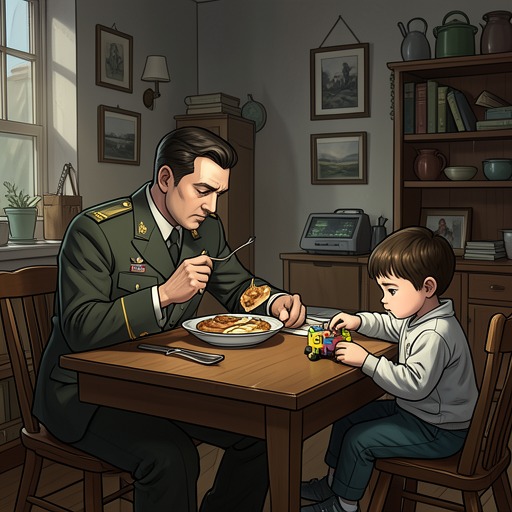
Doll imagines requesting a transfer east so that he can be “in the thick of” history. At home, while Hannah eats salad from a bowl with a wooden fork and spoon, he boasts that Germany is about to deal Judaeo-Bolshevism a decisive blow on the Volga. The city enters their conversation as a name through which he performs enthusiasm and military purpose; Hannah’s brief question about whom he means makes his ideological language sound less like shared knowledge than a script he expects her to accept.
That imagined front is set against Doll’s actual position within the camp bureaucracy. He feels caught between pressure to increase the labour force for the munitions industries and demands to dispose of as many evacuees as possible. A teletype proposes working able-bodied mothers to exhaustion in a boot factory at Chełmek, and Doll reacts by imagining the difficulty of separating mothers from their children at the arrival ramp. His frustration is directed at the proposal’s practical naivety, not at the persecution it would intensify. Stalingrad’s promise of decisive action therefore sits beside a regime whose own administrative priorities are divided between exploitation and killing.
A Battle Heard at a Distance
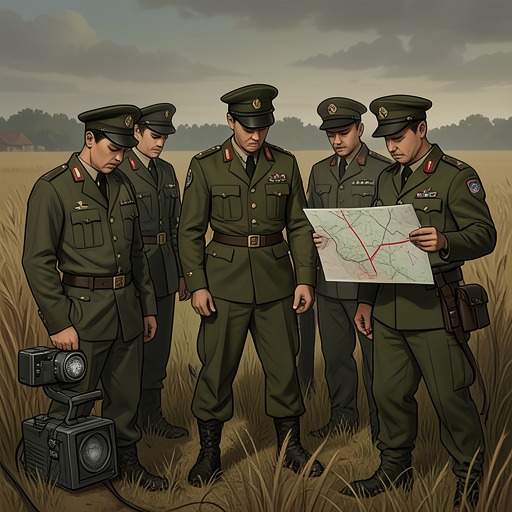
The novel makes the city’s military situation available to Doll through reports rather than direct experience. As Christmas approaches, he finds Wolfram Prufer an unexpectedly useful source on the eastern front. Prufer’s brother Irmfried is on Friedrich Paulus’s staff, and mail is described as the only thing still getting into or out of Stalingrad. That narrow channel of communication lends the city an image of isolation even as the officers’ mess continues to produce confident predictions.
Prufer assures Doll that Germany will prevail because “The German soldier scoffs at the objective conditions.” Doll asks what those conditions are. The narrative supplies a concrete answer: Paulus’s troops are encircled, frozen, and starving, while Erich von Manstein’s relief armour, which began marching three weeks earlier, has not yet engaged Georgy Zhukov. The contrast is not merely between optimism and pessimism; it is between a formula that dismisses evidence and a situation defined by encirclement, hunger, cold, and a relief force that has not reached its objective.
Reports, Surrender, and Denial
Doll’s dependence on the Volksempfänger makes Stalingrad a crisis of knowledge as well as a military defeat. The radio announces that the last heroic fighters raised their hands perhaps for the last time in their lives to sing the national anthems, presenting the end as a sacrifice whose meaning will become clear in the future. The phrasing turns defeat into anticipated national purpose. It gives Doll a consoling account before he has accepted that the German forces have surrendered.
The correction comes from Mobius. When Doll repeats the idea that the soldiers laid down their lives, Mobius bluntly says they did not: they surrendered. Doll cannot initially accept the word. Mobius then gives the scale of the disaster as 150,000 dead and 100,000 captive, and asks what the enemy will do with the prisoners. The city’s significance changes in this exchange. It is no longer a promised arena in which German victory will be forged, but the place whose outcome exposes the gap between the radio’s heroic language and mass death, defeat, and captivity. Doll’s official source has not simply omitted a detail; it has supplied an account designed to make surrender sound like a different event.
The Eastern War and the Policy of Murder
Later reflections place the eastern campaign beside the development of Nazi mass murder without reducing one to a simple cause of the other. Doll describes a letter dated July 31, 1941, drafted by Eichmann and Heydrich and signed by Göring, as authorizing a “total solution.” In his account, officials may initially have imagined deporting Jews to a cold, barren place beyond the Urals or inside the Arctic Circle after a rapid victory over Russia. As that territorial answer receded, pressure from officials in occupied Poland and the challenge of handling millions of additional Jews accompanied a further escalation: killing women and children as well as men.
The discussion makes clear that the novel does not present industrialized killing as dependent on a particular technology. Professor Peters tells Thomsen that gas chambers and crematoria accelerated the process, economized effort, and spared the nerves of the killers; bullets and pyres would have served the same murderous purpose. He cites the Einsatzgruppen’s killing of well over a million people by bullets. Read beside Stalingrad, this account sets the German army’s deteriorating fortunes against the regime’s continuing capacity and will to kill. The city does not explain the extermination policy on its own. Rather, its shifting place in the narrative—from coveted destination to besieged army’s last point of contact, then to an undeniable surrender—sharpens the contrast between the fantasy of eastern conquest and the violence carried out under its cover.